Hey Friends ... sign up for my newsletter and get my
FREE Practice Checklist
The Curveball & Easy Grips
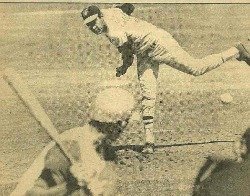
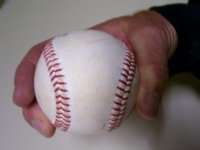
Beginners need to know how to throw the curveball.The curveball grip helps get us started throwing a curve ball.
There are many variations for breaking ball grips. The fingers are basically the same but where the fingers grip the baseball may vary on their position on the baseball.
The middle finger and the thumb are really 99% of throwing a curveball. The index finger rests slightly on the ball but has little impact. Some pitchers actually keep the index finger up in the air.
The middle finger and the thumb both rest against a seam on opposite sides of the ball. This gives the resistance and friction for the middle finger to create sharp spin when releasing the ball.
| Carl Stolz, the founder of Little League baseball said, "I discontinued my connection in 1956, when I saw the way things were going. The national organization in Williamsport began developing into a Frankenstein. I became utterly disgusted. Originally, I had envisioned baseball for youngsters stricly on the local level without national playfoffs and World Series and all that stuff." ('Until it Hurts' by Mark Hyman pg. 12 2009). |
How to Throw the Best Curveball
Professional pitchers use this pitching drill daily. Have the pitcher pretend to have already stepped so the feet are spread. Have the partner pitcher or catcher about 40-45 feet away just standing up or slight crouch.
The pitcher will prepare to throw a curveball by setting the curveball grip in their glove. Since we already have taken our step just rock back with your weight shifting to your back leg. Break the hands apart and throw the curve ball to the catcher.
The pitch should be pretty slow but should have maximum spin. The curveball is a ‘feel’ pitch so the pitcher has to throw the pitch with spin many times to develop the ‘feel’ and increase the spin revolutions. This drill allows for a youth pitcher to throw several breaking curve pitches without beating up their arm.
Curveball Tips for Success
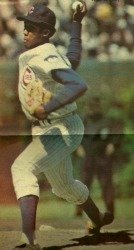
- Keep the wrist mostly straight at first. Later on you can bend the wrist, which will often create more break on the breaking ball.
- Try not to throw the pitch by snapping the elbow. Let the middle finger and the thumb do most of the work to create the best curveball.
- Develop a ‘over the plate for a strike’ curveball first. Later on you can add the ‘strike them out; you can’t hit this, nasty curveball.
- Do not slow down your arm speed or body or you might tip the pitch to the hitter.
- Practice throwing a curveball at a shorter distance and with less velocity. Emphasize maximum spin rather than a faster pitch.
- The curve can be 10-15 MPH slower than the four seam fastball.
- Some pitchers shorten their stride a tiny bit so the arm can get out in front and finish the throw by having a really fast downward follow-thru at the point of release and immediately after.
When to Start Throwing a Curveball
The top orthopedic and sports medicine experts advise young pitchers to put off the curveball and other breaking pitches until they shave. Basically at age 13 and older.
Players 12 years old and younger should spend all their pitching innings on the basic non breaking ball pitches. The four seam fastball, the two seam fastball, the straight changeup, and the hump up fastball.
Stay with the basic pitch grips. Avoid trick pitches like knuckleballs and other breaking pitches. Develop command, control and an ability to change pitching speeds with the fastball grips.
Avoid the 'Win-at-all-Costs' Tempatation to Throw a Curve
Many of the 12 and under youth baseball leagues have given in to the win-at-all-costs approach. The league administrators allow pitchers at these young ages to throw breaking pitches without regard to their baseball development.
The adults in the game have sacrificed their needs to win and jeopardize the player’s health and development. Look at how Little League has totally looked the other way and allowed breaking pitches at the expense of making money televising their games.
Do not succumb to the temptation to win-at-all-costs and put youngsters at risk of career ending arm injuries by allowing kids to throw highly taxing pitches under age thirteen.
Return to Pitching 101 from the Curveball
Baseball Impossible: Player Development Make-Over
Build Your Own Culture of Player Development
&
Increase Your Players FUN Level
6-DVD Video Set Building Your Complete Player Development System
Click to Order
Audio CD Format Click Here
Coaching 6-DVD Box Set
Yes Dave, I Want to Help My Players Enjoy the GAME
Coaching little league baseball & youth baseball can be a blast or could be a Tough Gig.
Who in their right mind would come back year after year and have teasing baseball practice and never improve their baseball skills? and get welled at by adults?
Baseball Coaching Videos: Watch over 6 hours of tips on coaching approach, style, philosophy, and my unique player development system.
Youth baseball carers are short-lived so lets make it count for our players. What do players really want out of playing baseball?
I want to find out more about the 6 DVD Player Development System
How to
Jump-Start Your Coaching Skills
"5 Steps to Ultimate Baseball Coaching Excellence"
Who: All baseball & softball coaching age levels
What: Teaches approach, philosophy, practice planning, drills, game management, communication skills, player development methods, and more. No other course compares.
5 Steps to Ultimate Baseball Coaching Excellence
Order Now
High Tempo© Baseball Development Systems
New innovative, accelerated youth baseball practice and competitive game format made to increase player development and the kids have a blast.
High Tempo© Baseball Development Systems
Phase I: High Tempo© Team Practice System
Phase II High Tempo© Competitive Game Modification System
Order Now
3 Course Bundle...Best Value
Downloadable eBooks
Check out these vitally important eBooks to include in your coaching library.
"Time to Shine: My Baseball Coaches Practice System 7 Year Plan to Help Kids Reach HS Baseball
"Build Your Ultimate Culture of Hitting"
Take a look at all the coaching products that will make your coaching experience top of the line and help bring your player's enjoyment level much higher.

Hey, I just want to take a second to thank you for stopping by and visiting coach and playing baseball.com. Thanks for your service to baseball and our youth. We as adults have a special privilege and enormous responsibility to deliver to our baseball youth today.
Remember, "How a leader is more important than what a leader knows." American Express
I hope there is something you can take away from here that is helpful to your scope of practice, whether you are a player, coach, parent or administrator.
Please share and pass on my link to others in the game that would benefit. Thanks Again!
Blessings
