Hey Friends ... sign up for my newsletter and get my
FREE Practice Checklist
Coaching Tee Ball: NO Problem
First Contact With Organized Baseball--So You
Better Get It Right
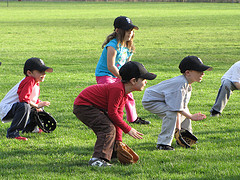
Coaching tee ball can be quite challenging. Especially since the human body development at age four, five and six usually does not include the motor skills to effectively play baseball very well.
The youngster kids catching and throwing skills at this age physically do not allow them to perform these fine motor skills very well. The hand-eye coordination required to catch the ball is just not there yet for kids in tee ball leagues.
The skills needed for hitting are not very advanced. Knowing all this here we are pumping out little ball players that can’t hit, can’t catch and can’t throw and hoping they don’t get hurt.
We are just introducing the game of baseball until their bodies grow up.
If the tee-ball age kid and the parents get turned off of youth baseball at the introduction age they likely will not return to the game.
Youth leagues better put some effort into getting this right--or it may be game over for your future players.
The Hidden Secret to Tee-Ball Success
Instantly Make Your Kid a College Baseball Prospect
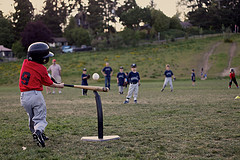
Baseball parents and t-ball coaches: If you don't do anything else make sure you do this one thing right now. I cannot emphasize enough how important this is to your kids baseball future.
You can make your kid an instant college and pro prospect by doing this one thing. It is so easy to do at this age. My dad did it with me and my brother and we both played Division I college baseball and minor league professional baseball.
Without this one step taken by my dad I really think I would have never been drafted by the Boston Red Sox.
The biggest opportunity for tee ball players to learn how to become a baseball player is their hitting. This is the perfect age for t-ball coaches to start every player out right and give them a dramatically better chance to someday play in college baseball and professionally.
Teach Baseball for Tee Ball Without Frustration
Expert Baseball Practice for Tee Ball
Teaching kids baseball at this tee ball league age is often a disappointing and frustrating task.
If you don't know how to keep 12 kids really, really busy and organized then we might lose them. Boring practices will send many baseball families for other sports and activities.
- Can you design a simple practice template for your baseball practices and keep kids safety in mind?
- Do you do the normal one kid bats and everyone else stands around picking flowers? Watch this and Never put all nine or ten players on the field and watch one kid bat.
- Do you know how to organize pre-game warm-ups into a productive baseball practice?
- Do you know what types of simple, affordable baseball equipment you can use to maximize player development during practice time?
- Do you know how to use the skills of other volunteer coaches to the best interests of the ball players?
- Are you knowledgeable enough to create a sandlot style scrimmage game into your practices for increased player development?
- Do you know what to tell baseball parents when explaining your coaching style and philosophy?
Dynamic Baseball Tips:
Teaching Baseball in T-Ball
I can help you out and make t-ball a player development experience that will hook kids and their families to stick it out until their little bodies mature into baseball players.
Baseball is a hard to game to play. At tee-ball age it is about player development and getting used to the ball. The more they touch it, catch it. throw it and swing it the more chance kids have to stick around for a few years and enjoy the game.
Find out more on how to have a great t ball experience and hook-em for years on baseball.
Read More Youth Baseball Today from Coaching tee ball
Back to Youth Baseball Home
Super Simple Guide to Coach Youth Baseball
Baseball Impossible: Player Development Make-Over
Build Your Own Culture of Player Development
&
Increase Your Players FUN Level
6-DVD Video Set Building Your Complete Player Development System
Click to Order
Audio CD Format Click Here
Coaching 6-DVD Box Set
Yes Dave, I Want to Help My Players Enjoy the GAME
Coaching little league baseball & youth baseball can be a blast or could be a Tough Gig.
Who in their right mind would come back year after year and have teasing baseball practice and never improve their baseball skills? and get welled at by adults?
Baseball Coaching Videos: Watch over 6 hours of tips on coaching approach, style, philosophy, and my unique player development system.
Youth baseball carers are short-lived so lets make it count for our players. What do players really want out of playing baseball?
I want to find out more about the 6 DVD Player Development System
How to
Jump-Start Your Coaching Skills
"5 Steps to Ultimate Baseball Coaching Excellence"
Who: All baseball & softball coaching age levels
What: Teaches approach, philosophy, practice planning, drills, game management, communication skills, player development methods, and more. No other course compares.
5 Steps to Ultimate Baseball Coaching Excellence
Order Now
High Tempo© Baseball Development Systems
New innovative, accelerated youth baseball practice and competitive game format made to increase player development and the kids have a blast.
High Tempo© Baseball Development Systems
Phase I: High Tempo© Team Practice System
Phase II High Tempo© Competitive Game Modification System
Order Now
3 Course Bundle...Best Value
Downloadable eBooks
Check out these vitally important eBooks to include in your coaching library.
"Time to Shine: My Baseball Coaches Practice System 7 Year Plan to Help Kids Reach HS Baseball
"Build Your Ultimate Culture of Hitting"
Take a look at all the coaching products that will make your coaching experience top of the line and help bring your player's enjoyment level much higher.

Hey, I just want to take a second to thank you for stopping by and visiting coach and playing baseball.com. Thanks for your service to baseball and our youth. We as adults have a special privilege and enormous responsibility to deliver to our baseball youth today.
Remember, "How a leader is more important than what a leader knows." American Express
I hope there is something you can take away from here that is helpful to your scope of practice, whether you are a player, coach, parent or administrator.
Please share and pass on my link to others in the game that would benefit. Thanks Again!
Blessings
