Hey Friends ... sign up for my newsletter and get my
FREE Practice Checklist
Easy Baseball Pitching Motion

In the pitching motion there are various phases of pitching. In our baseball article here we will pick up the phases of pitching in the pitchers delivery from the power-L pitching mechanic and continue with the motions until the follow-through is completed.
This will not get into the biomechanics of pitching a baseball. We will mainly point our recommendations for proper pitching mechanics. The correct baseball pitchers motion adds to the chances of
1. Throwing more strikes with different pitches.
2. Maximizing pitching velocity with baseball pitcher speed and still have control and command of pitches.
3. Reducing the risk of arm injuries and pitcher injuries with sound biomechanics of throwing.
4. Make it easier to get the pitching mechanics back on track if we get out of sync.
Power 'L' Pitching Technique
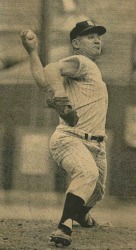
The first phase of pitching we will start with is the place in the baseball pitching motion when the front foot lands on the pitching mound.
We call this pitching technique the Power-L. The throwing arm ideally is shaped in an L shape.
This is the most powerful throwing position for a pitcher to get to.
If we stopped the pitching video from a side view when the front foot lands the pitching arm will come very close to forming the letter ‘L’.
Front Stride Leg:
Baseball Pitching Mechanics

One of the best tips on pitching is to land the stride leg with the front knee bent. Avoid locking the front leg in a straight position.
The straight locked front leg causes balance problems, higher risk for arm injuries and more difficulty controlling pitches.
Some famous pitchers have a slight bend and others bend the knee at a 90 degree angle. This is a personal preference with young pitchers—just make sure the leg lands with the knee bent and remains bent during the pitching motion finish.
Front Foot: The Complete Pitcher

Another pitching tip that seems kind of insignificant but is rather vital is the front foot position when the foot lands on the pitching mound. The foot should land on the ‘ball of the foot’ and NOT the heal first.
The important pitching tip is to keep the foot slightly pigeon-toed and firmly locked into the pitching mound.
This keeps the front shoulder from prematurely opening-up causing the pitcher to ‘fly open’ and lose command of pitching accuracy and pitching speed.
Do not allow the foot to ‘spin’ or ‘open-up’ during the pitching motion. Also, keep the feet aligned straight to the catchers target.
Avoid stepping ‘across your body’ as this adds difficulty in body balance and command of pitches.
Glove Arm: Baseball Throwing Mechanics
Let us take a look at some more pitching tips for baseball concerning the pitchers glove arm.
Ideally the baseball pitcher will use the glove arm elbow to point toward the throwing target. Fold the arm and keep the glove near the front chest muscle.
As the body trunk rotates the glove arm will fold up next the body just like a karate puncher would do with the non punching arm. Avoid pointing the glove arm straight at the throwing target.
Study the pros and famous pitchers. They are not always right, but baseball is their business. Why ask a butcher how to roof your house?
Back Leg: More Pitching Mechanics

Good pitching mechanics include the pitchers back leg releasing from the pitching rubber. The pitching rubber foot rotates over on the toes, lifts high up into the air and begins to return the ground well after the arm has released the ball.
The back leg lands even or slightly behind the front foot, softly and rolled over on the toe.
The large majority of body weight should stay on the front stride leg to force the body balance over the bent front leg. The chest should come close to the front thigh area allowing the back leg to raise high in the air before landing after the ball has been thrown.
Balance on Front Leg in the Pitch Motion
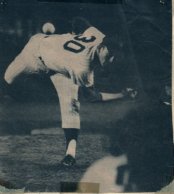
The final phases of pitching in the pitch motion has the young pitchers displaying body balance on the bent front leg all they way through the pitch motion.
Being able to control the body balance over the bent front leg helps increase pitching velocity combined with command of different baseball pitches.
Avoid over-striding during baseball workouts, pitching practice drills and bullpen pitching.
Keep the stride at no more than five of the pitchers shoe lengths. This will help youth pitchers avoid putting undo burden on the throwing arm and causing injuries.
For more pitching tips click to Pitching 101 from Pitching Motion
Baseball Impossible: Player Development Make-Over
Build Your Own Culture of Player Development
&
Increase Your Players FUN Level
6-DVD Video Set Building Your Complete Player Development System
Click to Order
Audio CD Format Click Here
Coaching 6-DVD Box Set
Yes Dave, I Want to Help My Players Enjoy the GAME
Coaching little league baseball & youth baseball can be a blast or could be a Tough Gig.
Who in their right mind would come back year after year and have teasing baseball practice and never improve their baseball skills? and get welled at by adults?
Baseball Coaching Videos: Watch over 6 hours of tips on coaching approach, style, philosophy, and my unique player development system.
Youth baseball carers are short-lived so lets make it count for our players. What do players really want out of playing baseball?
I want to find out more about the 6 DVD Player Development System
How to
Jump-Start Your Coaching Skills
"5 Steps to Ultimate Baseball Coaching Excellence"
Who: All baseball & softball coaching age levels
What: Teaches approach, philosophy, practice planning, drills, game management, communication skills, player development methods, and more. No other course compares.
5 Steps to Ultimate Baseball Coaching Excellence
Order Now
High Tempo© Baseball Development Systems
New innovative, accelerated youth baseball practice and competitive game format made to increase player development and the kids have a blast.
High Tempo© Baseball Development Systems
Phase I: High Tempo© Team Practice System
Phase II High Tempo© Competitive Game Modification System
Order Now
3 Course Bundle...Best Value
Downloadable eBooks
Check out these vitally important eBooks to include in your coaching library.
"Time to Shine: My Baseball Coaches Practice System 7 Year Plan to Help Kids Reach HS Baseball
"Build Your Ultimate Culture of Hitting"
Take a look at all the coaching products that will make your coaching experience top of the line and help bring your player's enjoyment level much higher.

Hey, I just want to take a second to thank you for stopping by and visiting coach and playing baseball.com. Thanks for your service to baseball and our youth. We as adults have a special privilege and enormous responsibility to deliver to our baseball youth today.
Remember, "How a leader is more important than what a leader knows." American Express
I hope there is something you can take away from here that is helpful to your scope of practice, whether you are a player, coach, parent or administrator.
Please share and pass on my link to others in the game that would benefit. Thanks Again!
Blessings
