Hey Friends ... sign up for my newsletter and get my
FREE Practice Checklist
Top Baseball Infield Drills
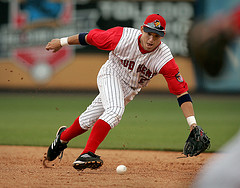
The best baseball coaches know how to use baseball infield drills to improve players’ ball handling skills, techniques and fundamentals.
Through baseball lesson plans and practice planning top youth coaches use various infielder drills, outfielder drills, throwing drills and fielding drills to teach baseball skills.
What makes the best coaches the best is they know how to disguise a fundamental defensive drill into a game.
When fun baseball drills are used the players do not realize they are even practicing. Players instead are playing a game during the drill and forget the monotony of doing a boring defensive drill.
They even get their baseball conditioning while doing baseball infield drills done while competing and fail to realize they are doing conditioning drills at the same time.
Drills Kill Skills: Get Rid of Boring Drills
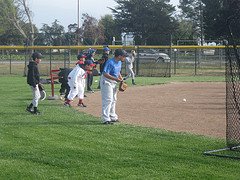
The best advice on how to attract kids to baseball is to avoid boring defensive baseball infield drills.
Having the players run to their positions and a youth coach hit one ball at a time and throw it to a base and then throw the one ball back to home plate so the coach can hit another ball is really, really boring.Click to Rapid Fire Action Packed Fungo Drill
Meanwhile, the other ten ballplayers are standing around waiting.
Or, a single file line is formed in the outfield and one by one each outfielder takes their turn catching a batted ball throw it back to the coach or a shagger and go back to the end of the line.
Eliminate boring drills by using mini-competition in your drills. The kids will be energized, get an enormously large amount of defensive skills practice during baseball infield drills and improve their ball handling abilities during catching and throwing drills.
How Do I Teach Baseball Basics?
Top 5 Coaching Tips
First, workout all the players in the baseball infield drills and skills regardless whether they play infield or outfield. Baseball players need to handle the ball.
Catching skills and throwing drills are the basic fundamental foundation for playing baseball well. This is one of the biggest reasons kids play baseball—to improve catching, throwing and hitting skills.
Second, learn how to make baseball practice fun. Have players get their ball handling during competitive drills.
Third, keep the practice pace fast. Use multiple baseballs, shaggers and buckets so you do not always have to wait for one ball to batted and returned to the fungo hitter before the next practice ball is batted.
Fourth, shut your pie hole. Coach positively while conducting the drill or be quiet. Avoid stopping the drill too often and for too long hammering on your kids for every little boo-boo.
Keep the drill moving---kids do not want to hear Charlie Brown’s teacher saying Blah, blah, blah, blah, blah all day long. The players want to play--not hear someone scolding them all the time.
Fifth, be empathetic and conscious of the difficulty to play baseball well. To catch a ball cleanly and come up to a balanced throwing position and make a quick, accurate, hard throw and then have someone else on the base catch the ball is not the easiest sports feet to accomplish. This is not always going to happen.So, have patience and appreciate the effort players put out while understanding the game of baseball is extremely difficult to play well.
Infield 'Goalie Drill
How to Make Practice Fun!
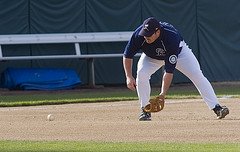
The Goalie Infielder Drill is a competitive fielding baseball infield drill for the entire team. A space is measured off or marked off which symbolically resembles a ‘goalie’ area similar in effect as a hockey goal or a soccer goal. The infielder has to ‘guard’ against the groundball getting past them into the goal.
- Mark off a reasonable area for the goal. If playing on a dirt surface the goal can be marked by making a line in the dirt. You can use cones or anything that is safe and out of the way of the players fielding.
- Players line up single file behind the first player in the goal.
- The players take a turn each fielding a groundball. If successful at keeping the groundball getting through the goal they stay in the game and go to the back of the line. If the grounder gets by them into the ‘goal’ they step aside and are out of the competition.
- You can use total points instead of elimination. Increase the points per round as the difficulty of fielding the groundballs increases.• Optional to make a throw to base after the play.
- If the ball is bobbed or knocked down but is within a step or two you may want to let the player remain in the game or give them partial points.
- You may want to consider ‘throwing’ the grounders. You have to have pretty good control of the speed and velocity of the grounders in order not to hurt someone. Fungo hitting and controlling the velocity and direction is not that easy even for experienced fungo hitters—so, take caution you that you do not dome someone by hitting a scalding liner.
- Widen the ‘goal’ as needed. The ‘goal’ may have to be widened as the rounds continue and players are making too many plays. You want the infielders to cover ground as the drill continues.
- Many young players like to dive for the ball and get dirty and this is an opportunity to go home with a dirty uniform indeed.
- Move the fungo hitter/thrower up to a close range and keep the drill condensed in a small area. No need to use the whole diamond as the area is too big and the drill pace slows down.
- Keep the drill moving. As soon as one player makes the play the next one in line has to ready to go in their defensive ‘down and ready’ position.
- Have two goalie drills going on simultaneously. Split the groups into two and double the action. Have the two winners face off. Second place face off and so on.
- This is a really good defensive baseball infield drill for any age group. An excellent summer baseball camp drill, too.
Back to Youth Baseball Home
Go to Baseball Practice Tips from baseball infield drills
Baseball Impossible: Player Development Make-Over
Build Your Own Culture of Player Development
&
Increase Your Players FUN Level
6-DVD Video Set Building Your Complete Player Development System
Click to Order
Audio CD Format Click Here
Coaching 6-DVD Box Set
Yes Dave, I Want to Help My Players Enjoy the GAME
Coaching little league baseball & youth baseball can be a blast or could be a Tough Gig.
Who in their right mind would come back year after year and have teasing baseball practice and never improve their baseball skills? and get welled at by adults?
Baseball Coaching Videos: Watch over 6 hours of tips on coaching approach, style, philosophy, and my unique player development system.
Youth baseball carers are short-lived so lets make it count for our players. What do players really want out of playing baseball?
I want to find out more about the 6 DVD Player Development System
How to
Jump-Start Your Coaching Skills
"5 Steps to Ultimate Baseball Coaching Excellence"
Who: All baseball & softball coaching age levels
What: Teaches approach, philosophy, practice planning, drills, game management, communication skills, player development methods, and more. No other course compares.
5 Steps to Ultimate Baseball Coaching Excellence
Order Now
High Tempo© Baseball Development Systems
New innovative, accelerated youth baseball practice and competitive game format made to increase player development and the kids have a blast.
High Tempo© Baseball Development Systems
Phase I: High Tempo© Team Practice System
Phase II High Tempo© Competitive Game Modification System
Order Now
3 Course Bundle...Best Value
Downloadable eBooks
Check out these vitally important eBooks to include in your coaching library.
"Time to Shine: My Baseball Coaches Practice System 7 Year Plan to Help Kids Reach HS Baseball
"Build Your Ultimate Culture of Hitting"
Take a look at all the coaching products that will make your coaching experience top of the line and help bring your player's enjoyment level much higher.

Hey, I just want to take a second to thank you for stopping by and visiting coach and playing baseball.com. Thanks for your service to baseball and our youth. We as adults have a special privilege and enormous responsibility to deliver to our baseball youth today.
Remember, "How a leader is more important than what a leader knows." American Express
I hope there is something you can take away from here that is helpful to your scope of practice, whether you are a player, coach, parent or administrator.
Please share and pass on my link to others in the game that would benefit. Thanks Again!
Blessings
